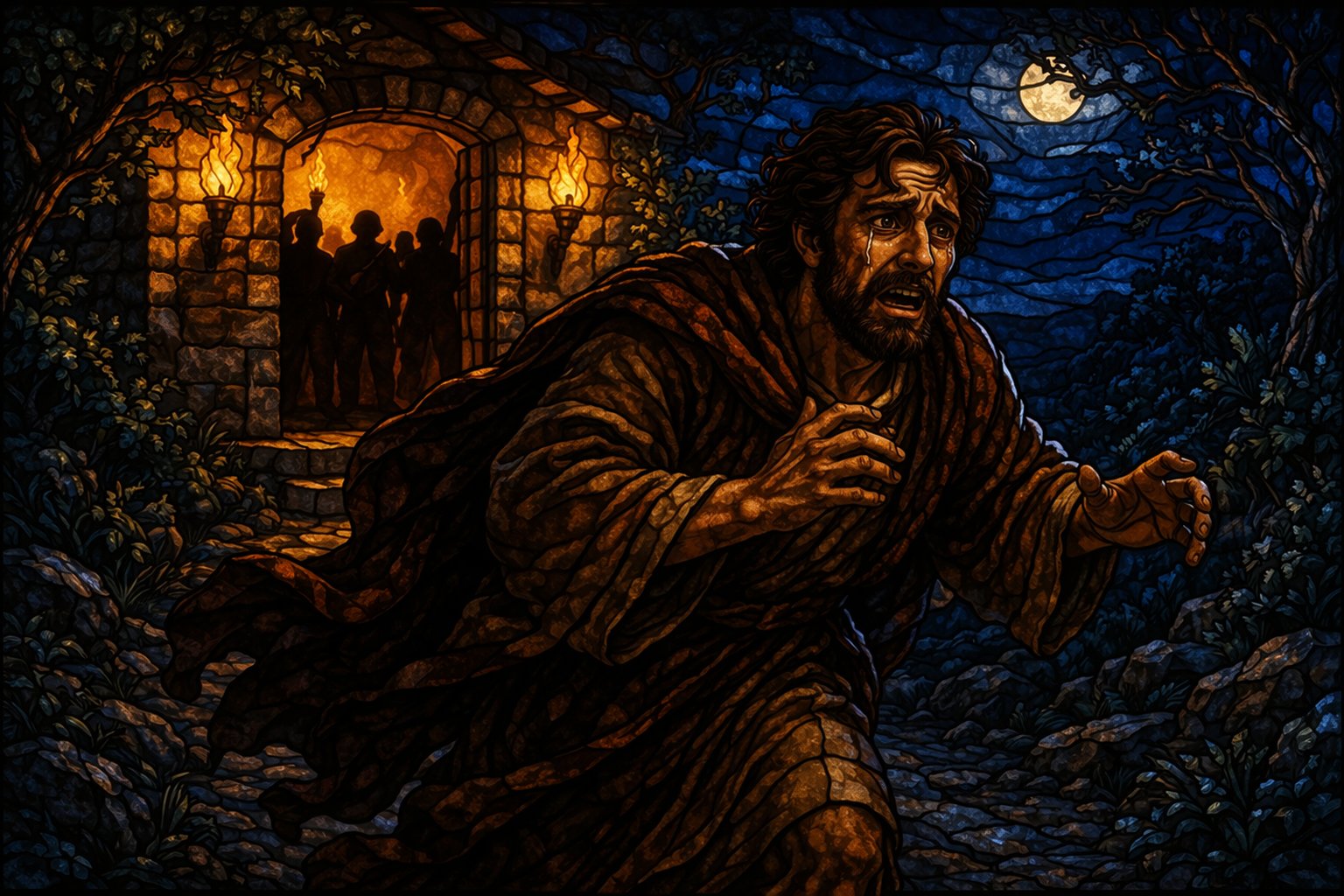
“I have sinned,” he said, “for I have betrayed innocent blood.” “What is that to us?” they replied. “That’s your responsibility.” So Judas threw the money into the temple and left. Then he went away and hanged himself.” (Matthew 27:4-5)
Judas is overwhelmed with the sudden, stark realization of his mistake. Gone is the taunting saunter and the cold conniving. Instead, a broken whimper of a man flatly confesses to unsympathetic priests: “I have sinned for I have betrayed innocent blood.”
Their lack of concern for him is stronger than their insistence that Jesus is guilty: “What is that to us?” Their indifference to his agony is deafening. He is nothing but a means, a detail, a tool. They offer no solace for the regrets that are consuming him. Rather, they heap more fuel to his suffocating shame: “That’s your responsibility.”
Where else will this broken man go? To whom will he turn? He has betrayed his rabbi, his lord, his God. He has sold out all that is sacred and dear to him in bitter anger. Judas is utterly alone to fend against the sins that he alone has committed. The silver for which he has traded his life is more than a nuisance but a rebuke to him – he throws it on the temple floor and flees into the night.
Tragically, it is only in hindsight to the deal he made with the religious leaders that Judas is able to see clearly that the silver is worse than worthless – it is a condemnation. Each coin’s clink and clatter in the heft of the filled purse prompts the plaguing question rising up in his mind with every belabored, panicked breath: Was it worth it?
Hadn’t his rabbi taught: “What good will it be for someone to gain the whole world, yet forfeit their soul? Or what can anyone give in exchange for their soul?” (Matthew 16:26). He has undersold “the gift of God” (John 4:10) – and has gained nothing but the guilt that weighs far heavier than the bag of coins.
Judas is already in hell by the time he flees into the night. He cannot breathe beyond the cloud of condemnation. He chokes on the engulfing guilt around him. He sees nothing clearly but his own suffocating regrets and heartbreak. He thinks that in hanging himself he may gain the peace he has forfeited. Instead, he has completed the tragic cycle: he has robbed himself the chance at God’s redemption. Judas decidedly commits to making his sins and mistakes the final word of his life – rather than the grace of God able to save every sinner, even and especially the ones who have betrayed him.
The only substantial difference between Judas and Peter is this: Peter allowed Jesus’s grace to be the final word of his life, while Judas insisted that his own guilt be his defining legacy. The only one who rightly has the first and last words of our life is none other than the God-man who is the First and the Last, the Alpha and the Omega. May we yield our lives and legacies to him alone.