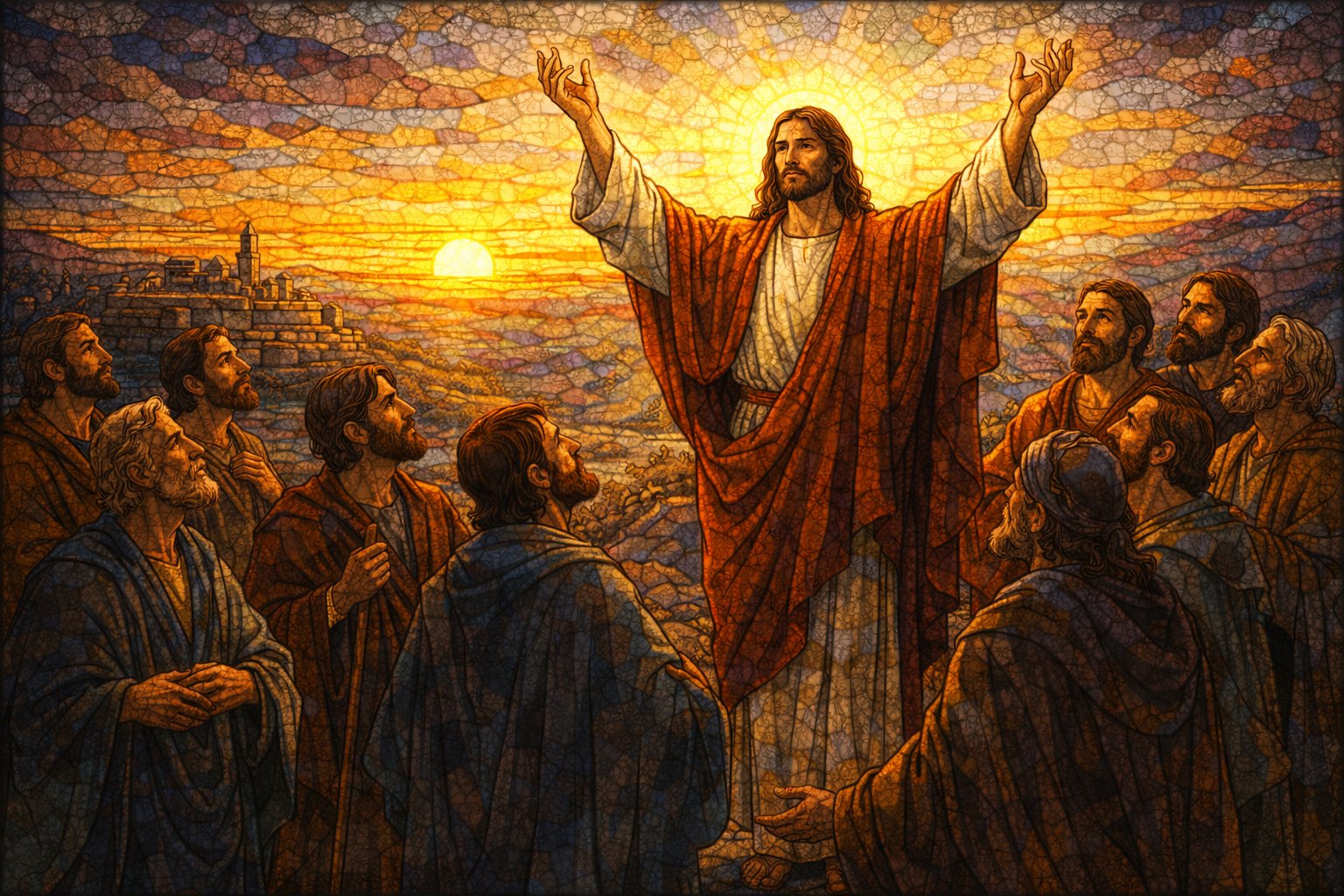
“While they were still talking about this, Jesus himself stood among them and said to them, ‘Peace be with you.’” (v. 36)
The disciples have gathered together. They have received the women’s report of angels at the tomb. Peter has found nothing but the linen strips where the body should have been. The two from Emmaus have returned with their own sighting of Jesus. It is unmistakable now: Christ has risen from the dead!
With rising incredulity, they chatter among themselves about all that this could mean. And it is into this buzz of excitement that Jesus suddenly appears among them with the simple, nearly anti-climactic greeting: “Peace be with you.” (v. 36)
They jump with a start, thinking him to be a ghost.
We saw you scourged and skewered.
We saw you nailed to the cross.
We saw you buried behind stone, seal, and soldiers.
How is it you are here among us?!
Though Jesus has spent his entire earthly ministry proving his divinity to the masses, he now seeks to demonstrate his mortality to his friends: “Do you have anything here to eat?” No ghost, apparition, or vision is capable of such a mundane demonstration. Surely, he is a man just as they are!
But now further questions arise in their minds. For what reason was he slain? Why did he have to suffer so greatly? How is he even sitting here among them?
Preempting all of their questions, Jesus explains: “Everything must be fulfilled that is written about me in the Law of Moses, the Prophets and the Psalms.”
As he has always insisted to them, Jesus follows no mortal agenda. He follows a divine promise and plan from eternity past. Not one of God’s promises has failed (Joshua 23:14). Every loose thread from Adam, Noah, Abraham, Moses, David and onward has been woven up into the perfect life, death, and now resurrection of Jesus of Nazareth. The Word of God has not just talked the talk through the prophets, He has walked the walk through Jesus Christ. The least likely Messiah has undercut the powers and principalities in the most unanticipated way, ushering in the unshakable reign of God’s kingdom through self-sacrifice.
Now the nations have been prepared: “repentance for the forgiveness of sins will be preached in his name to all nations, beginning at Jerusalem” (v. 48).
What angel could have guessed, what demon could have surmised, and what prophet could have fully grasped the wisdom of God in choosing to do it all this way? Prophecy is such that God proclaims his plans plainly – and they still come as a complete shock to those who witness it.
Out of “joy and amazement” (v. 41) we insist it is too good to be true. And yet, we discover the unmistakable testament of the cross of Christ: that the promises of God are staked in history, staked in a man, staked in God Himself. And staked as they are firmly in the sediment of resurrection, they are strong enough to hold us through the torrent of the tragic and the unexpected.
A risen dead man testifies: heaven and earth will pass away before even an iota of God’s promises fail.