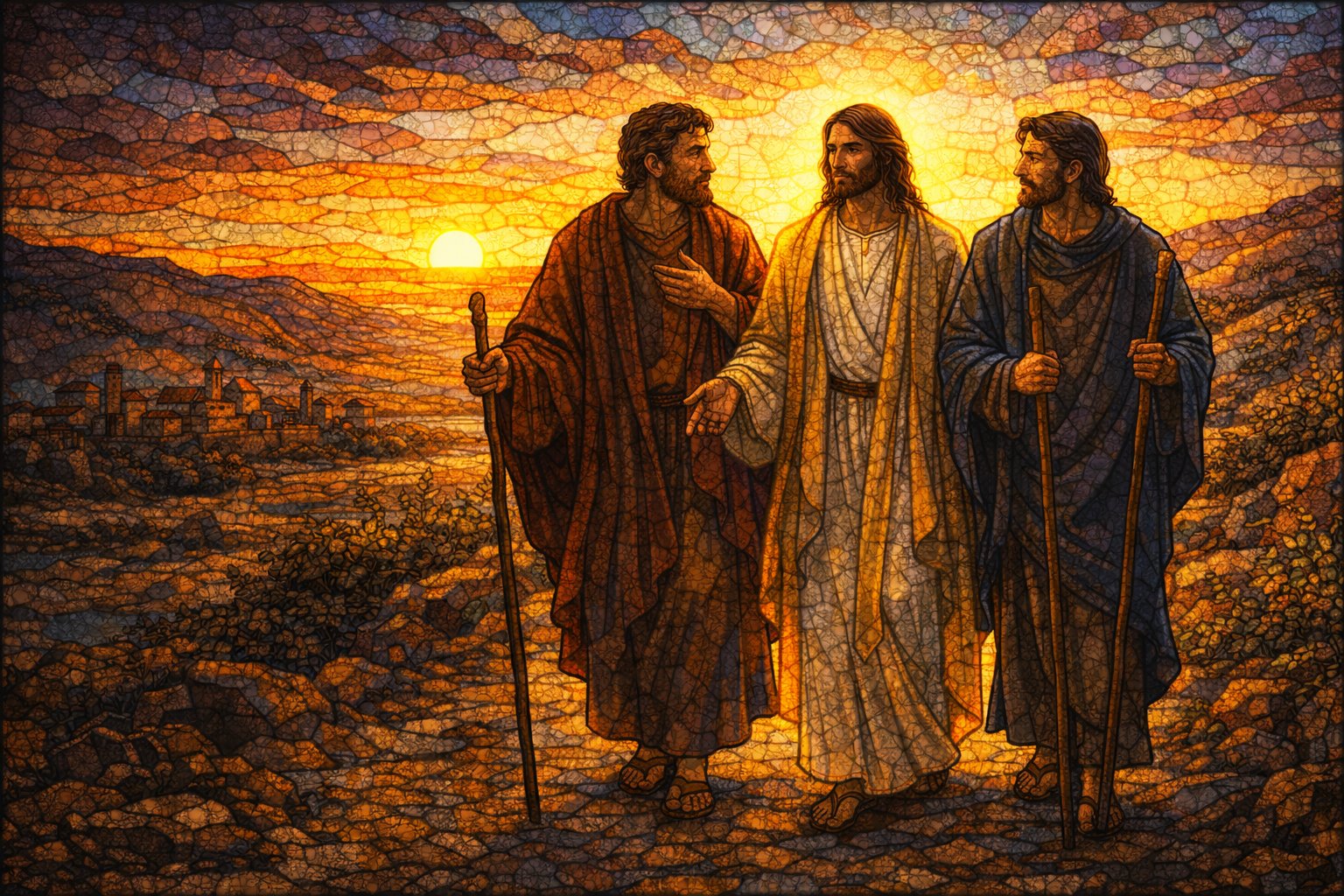
“Were not our hearts burning within us while he talked with us on the road and opened the Scriptures to us?”
As the band of faithful followers continue to wonder about the empty tomb, two of the disciples set out on a journey from Jerusalem to Emmaus. By foot, the journey would take the greater part of the day. But they have all day: for they are discussing “everything that had happened” (v. 14). Nearing the halfway point between the two cities, when the wilderness is thickest and civilization faintest, the two disciples are joined by a third man journeying in the same direction.
Overhearing them, the newcomer asks: “What are you discussing?”
Certainly, the cluelessness is genuine, but unbelievable: “Are you the only one visiting Jerusalem who does not know the things that have happened there in these days?”
Again, the innocent response: “What things?”
The question is goading, for they launch into a full explanation. Propelled by passion, they share all that Jesus had done, what he had promised, and for what they had hoped. Though they describe him to be a “prophet, powerful in word and deed before God and all the people” (v. 19) they fall short of claiming he is anything more. They even share what the women had just reported that very morning: the tomb was empty.
But was the man fishing for more than just information? Was he not fishing for their hearts?
Scarcely able to help himself, he chides them for their reticence to believe and launches into an explanation himself: “And beginning with Moses and the Prophets, he explained to them what was said in all the Scriptures concerning himself” (v. 27).
The explanation eats up the rest of the journey to Emmaus. The sun begins to set, the village nears. This nameless, third wanderer “continues on as if he were going farther” (v. 28). But they insist for him to stay with them in Emmaus.
And it is only when they have taken their familiar seats at a table not unlike the others they had shared with their Lord and rabbi years prior that they – seeing him take bread, give thanks, break it, and give it to them – suddenly recognize who they have been walking with that day: Jesus!
They see it now: his clueless, unassuming presence was divine playfulness! There was only one man who had taken bread that way, given thanks that way, broken it that way, and handed it to them with that same conviction of care and love that way. They had spent the day talking with the man, walking with the man – but it was only when he handed the bread to them that they suddenly saw him for who he is – just as he vanished from their sight!
Getting up at once, the two disciples journey all through the night back to Jerusalem and report immediately to the other disciples: Jesus is alive!
How often is Jesus missed when he is walking right alongside us on life’s path? How quickly do we mistake his questions, his silence for cluelessness? Is not all this meant to draw us out – to bring us back to the table of grace that he has prepared for us at the end of the day?
It is only when disciples along life’s journey gather at the same table of grace that they can fully recognize God’s presence – alive, fully alive – at work among them. They can be warmed by the companionship that comes with mutual discipleship. They can even burn with conviction by the opening of the Scriptures. But it is only when they have mutually seated themselves, hungry, at the table of grace that they totally recognize God's presence among them.
Take your seat.
Receive again.
You are hungry – and God’s sacrifice is prepared to satisfy you again.